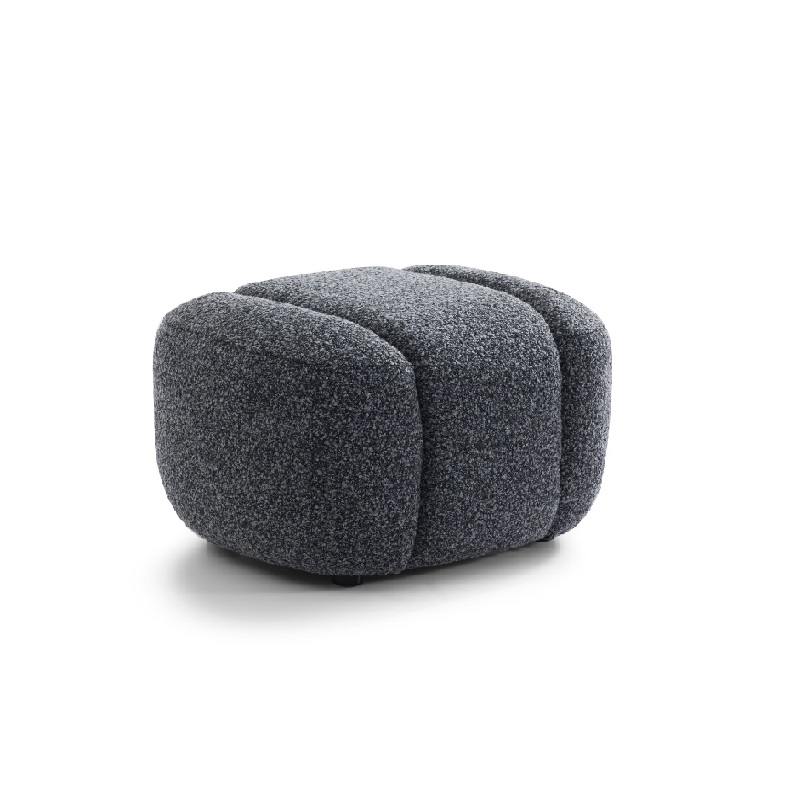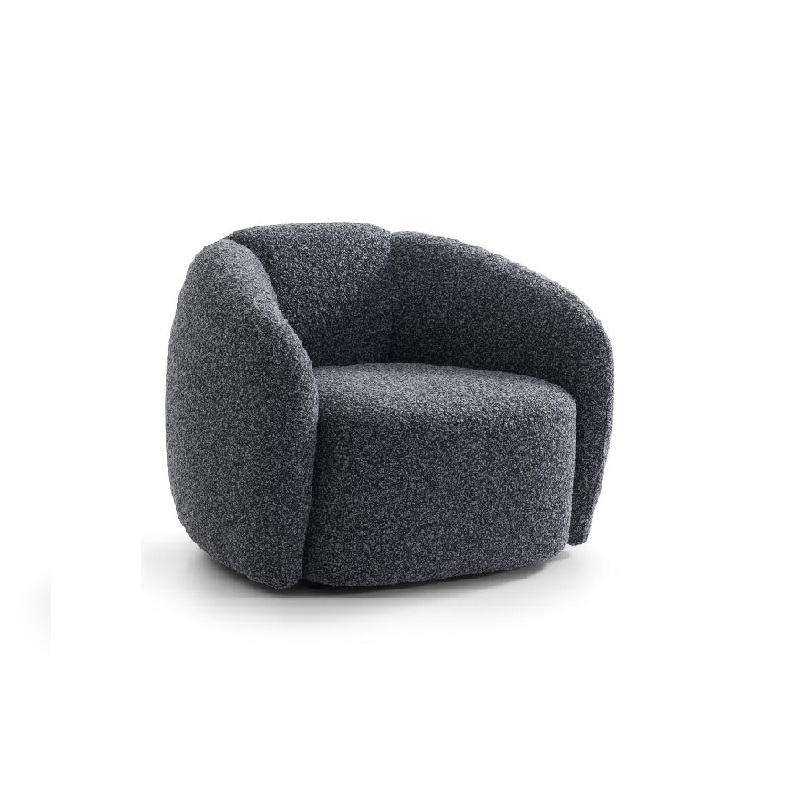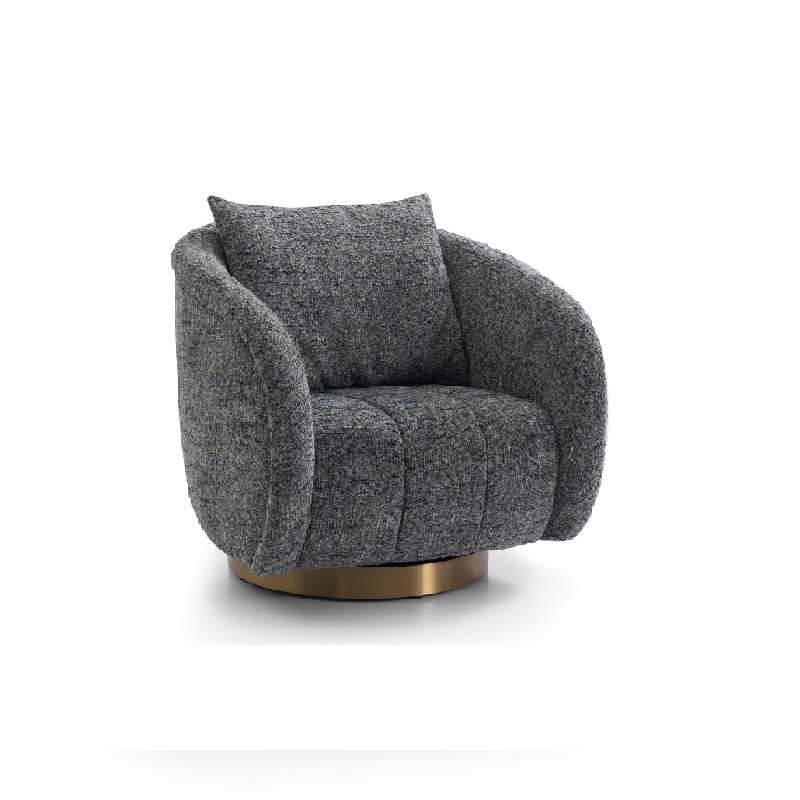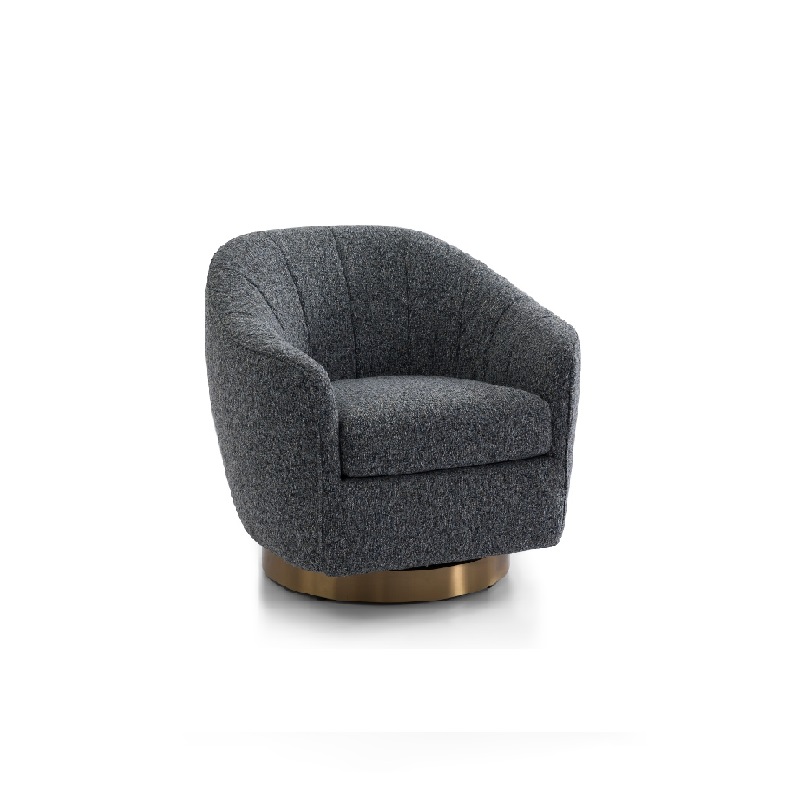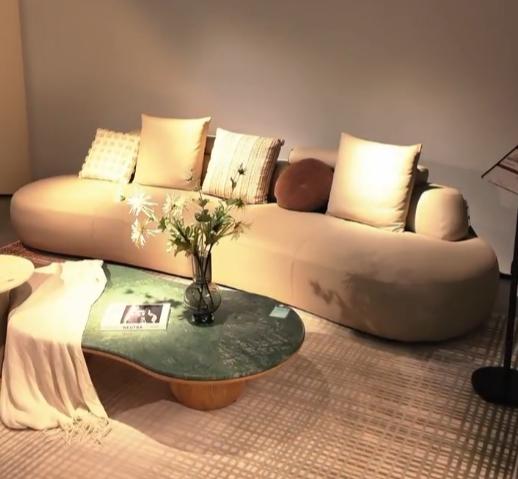
Curved seating creates a focal point in a furnished living room. Review the end seats and table reach before defining the collection layout.
Curved fabric sofas give a retailer a way to distinguish a living room collection through shape, rather than another color option. They can anchor an open seating arrangement and encourage the sale of coordinating chairs and tables. For project buyers, the same silhouette can help define a conversation area without placing every seat against a wall.
That opportunity comes with a purchasing condition: the curve must be repeatable, usable in the intended space, and supported by an agreed specification. A striking sample is only the beginning. The commercial decision also depends on fabric consistency, customization limits, production timing, and support for repeat orders.
Start your shortlist with a modern contemporary curved sofa, then assess the whole buying program. The right model should preserve its visual appeal when the sample becomes a bulk order.
A Front View Can Hide an Expensive Revision
The widest measurement does not describe the full arc. One end may project into a route, while a rear seam becomes prominent when the sofa faces away from the wall. A late profile change can then affect the frame, cushion positions, and upholstery panels together.
Give the supplier a room plan and a versioned drawing. Request the overall width, maximum depth, end projection, seat dimensions, and views of the back. Review the end seats with the intended coffee table so the stated seat count reflects usable positions.
A Good Sample Does Not Define Bulk Acceptance
Curved upholstery exposes fabric direction, seam alignment, and uneven tension across broad panels. A small cutting cannot establish whether those details will remain consistent across a retail program.
Retain an approved upholstered reference and its fabric code. Agree how dimensions, seams, cushion feel, and appearance will be checked against that reference. Record accepted variation and the process for approving any material substitution before production begins.
Repeat Orders Need More Than a Model Name
A later order may use a different cloth batch or a revised construction. Confirm the model version, fabric availability, minimum quantity by finish, and replacement-part options at the outset. Do not promise identical color matching years later or assume every visible panel can be ordered separately.
SCIHOME is an upholstered furniture manufacturer founded in 1999, focused on fabric sofas, upholstered beds, and related furniture. Our company materials identify four production bases and an R&D center with more than 100 designers and engineers, producing more than 50 new drawings per month and 250 new products per year. We serve brand clients in markets including Japan, Korea, Australia, and the United Kingdom. Our company profile lists ISO 9001 certification and BSCI assessment credentials; request the current documents and relevant scope during supplier qualification.
For a curved range, our development process takes the brief through drawings and renderings, a physical sample, and final technical specifications. This gives your team a practical way to resolve the outline before evaluating the upholstery and sitting feel. We also offer sofas, chairs, tables, and ottomans for a coordinated collection discussion.
For a layout risk: send the room plan and fixed furniture positions. Ask us to review the sofa outline and identify the measurements needed for approval.
For a finish risk: identify the cloth and visible sides. Use the sample review to settle panel direction, seam appearance, and the retained reference.
For a launch deadline: provide quantity, finishes, and the approval date. Request a model-specific schedule and inspection plan, including the handling of later changes.
Factory scale supports the supplier discussion, but it does not reserve a production slot. Confirm available capacity for your actual quantity and timing with us before fixing a launch date.
SCIHOME ES0507 combines an integrated curved silhouette, neutral-tone fabric, high-density sponge filling, and a medium-firm sitting feel. These documented features make it a concrete starting point for reviewing a contemporary curved couch within a proposed collection.
The product description identifies an integrated non-detachable structure. Although catalogue labels also use modular terminology, do not infer that buyers can freely rearrange sections. Confirm the current construction and orderable configurations before publishing an arrangement diagram.
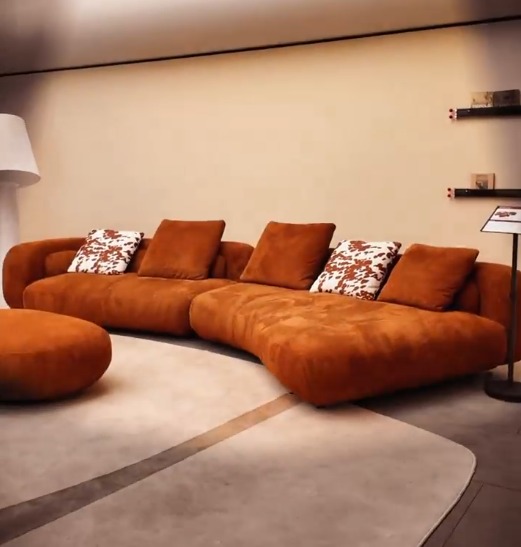
Rounded upholstery shows why fabric direction and tension matter across a broad surface. Confirm the pictured model and proposed finish separately when developing your range.
Use the following review to connect the sample to a purchasing decision. It identifies what needs written confirmation before the model is released for bulk production.
|
Approval area |
Evidence to request |
Purchasing decision |
|---|---|---|
|
Outline and seating |
Versioned dimensions, rear view, and end-seat review |
Does the arc fit the room and support the stated seating? |
|
Upholstery |
Fabric code, panel direction, seam reference, and relevant test reports |
Can the finish meet the intended use and repeat-order standard? |
|
Construction |
Frame and cushion specification, sitting sample, and configuration list |
Is the quoted build the version the team approved? |
|
Production |
Quantity by finish, approval milestones, and inspection criteria |
Is the range ready for a confirmed production schedule? |
|
Ongoing support |
Model identification, component availability, and claims procedure |
What can the retailer promise after the first order? |
An attractive sample should move forward only when the matching specification and commercial terms are clear. A blank in this comparison is a question to resolve, rather than a detail to leave to memory.
ODM for an Existing SCIHOME Design
Begin with a factory-developed model such as ES0507. Tell us which fabric, color, size, or finish changes you want, and ask which are feasible within that design. An existing platform can reduce the amount of new design work, but a structural change still needs technical review and revised approval.
OEM for a Buyer Defined Design
Provide your own drawings or a defined design brief, required dimensions, material direction, intended market, quantity, and target cost. We can develop drawings and renderings before sample review and final technical specification. New geometry or construction requires its own feasibility assessment; a reference image alone is not a complete production instruction.
For either route, use a clear sequence: brief review, development scope and quotation, drawings, material selection, sample assessment, signed specification, and bulk production approval. Confirm sample charges, revision allowances, and production milestones in the quotation.
Furniture Retailers and Multiple Stores
Your risk is inconsistency between the display sample, product listing, and replenishment order. Agree a common specification across stores, retain the approved cloth, and define the configurations each store can sell. Ask us to review the sofa with the planned companion furniture so the room set remains commercially coherent.
Residential Developers and Furnished Apartments
Your risk is a sofa that looks right in a presentation but does not fit repeated unit layouts. Supply the relevant plans, room quantities, and finish schedule. Request a review of the full outline and a sample setting before extending the specification across the project.
Hotel Lounges and Other Shared Spaces
Your risk includes frequent use, maintenance demands, and project-specific safety requirements. State the intended use and required fabric performance, strength, and fire-test evidence before model selection. A residential product photograph and ISO 9001 certification do not establish that a particular sofa meets a hotel brief. Ask us which evidence is available and what further assessment is needed.
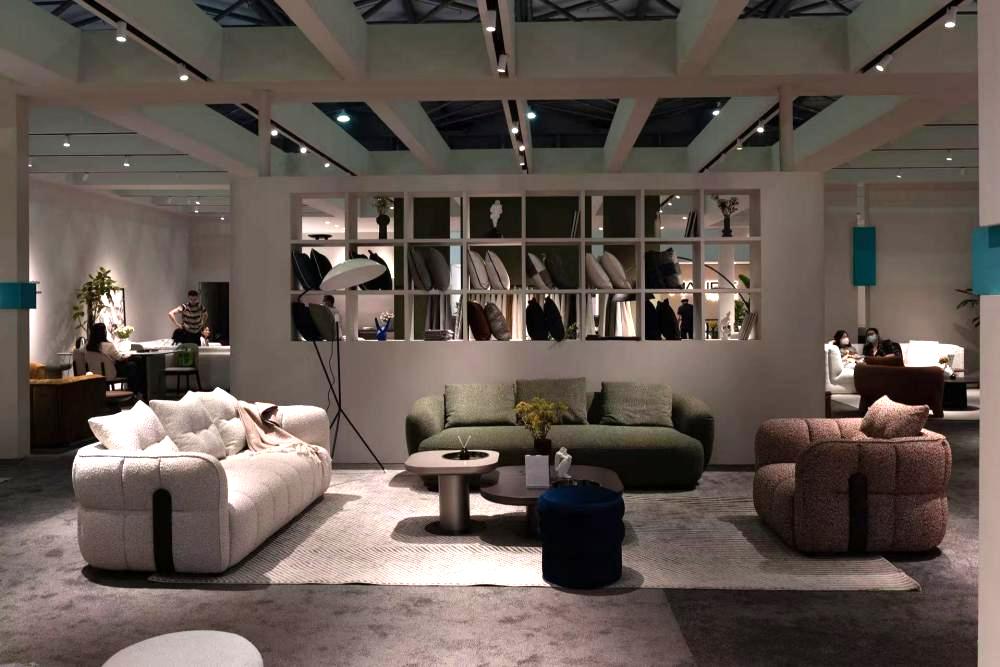
A coordinated showroom setting illustrates a collection discussion across sofas, chairs, and tables. The image is a design reference rather than evidence of a completed hotel project.
What Is the MOQ for a Curved Fabric Sofa Order
Request the minimum for the selected model, fabric, and color combination. A total order quantity does not establish the minimum per finish. Send your proposed assortment so we can discuss a workable quotation.
How Long Does OEM Sofa Development Take
Our published process indicates about five days for design drawings, followed after approval by approximately 15 days for renderings, sample development, and technical specifications. It lists around 45 days for the first production order. Treat these as indicative stages and reconfirm the schedule for your design, materials, and approval cycle.
Can the Curve or Facing Direction Be Changed
Request an engineering review. Reversing a catalogue image does not create an orderable configuration. Confirm the viewpoint used for left and right, the revised outline, and whether a new sample is required.
Which Fabric Reports Should a Project Buyer Request
Specify the intended market and use, then request applicable abrasion, pilling, colorfastness, and fire-test evidence for the actual cloth and construction where relevant. Agree methods and acceptance levels; one favorable score does not answer every performance question.
Can SCIHOME Support Repeat Orders and Repairs
Discuss fabric continuity, version identification, available components, and warranty terms before placing the first order. Confirm the options for the selected model rather than assuming that covers or upholstery panels are removable or separately available.
A curved sofa earns its place when its visual value survives room planning, sample review, and bulk specification. For buyers, the useful outcome is a range that sales teams can describe accurately and purchasing teams can reorder against an identified reference.
Exploring the category: request our current fabric sofa catalogue and identify the styles and companion pieces you want to assess.
Developing a model: send a room plan or drawing, target dimensions, fabric direction, and quantity. Request a drawing review and sample proposal, including the applicable fees.
Preparing a project quotation: provide the market, intended use, finish schedule, test requirements, and launch date. Contact SCIHOME for a one-to-one discussion of the scope, production timing, and approval milestones.