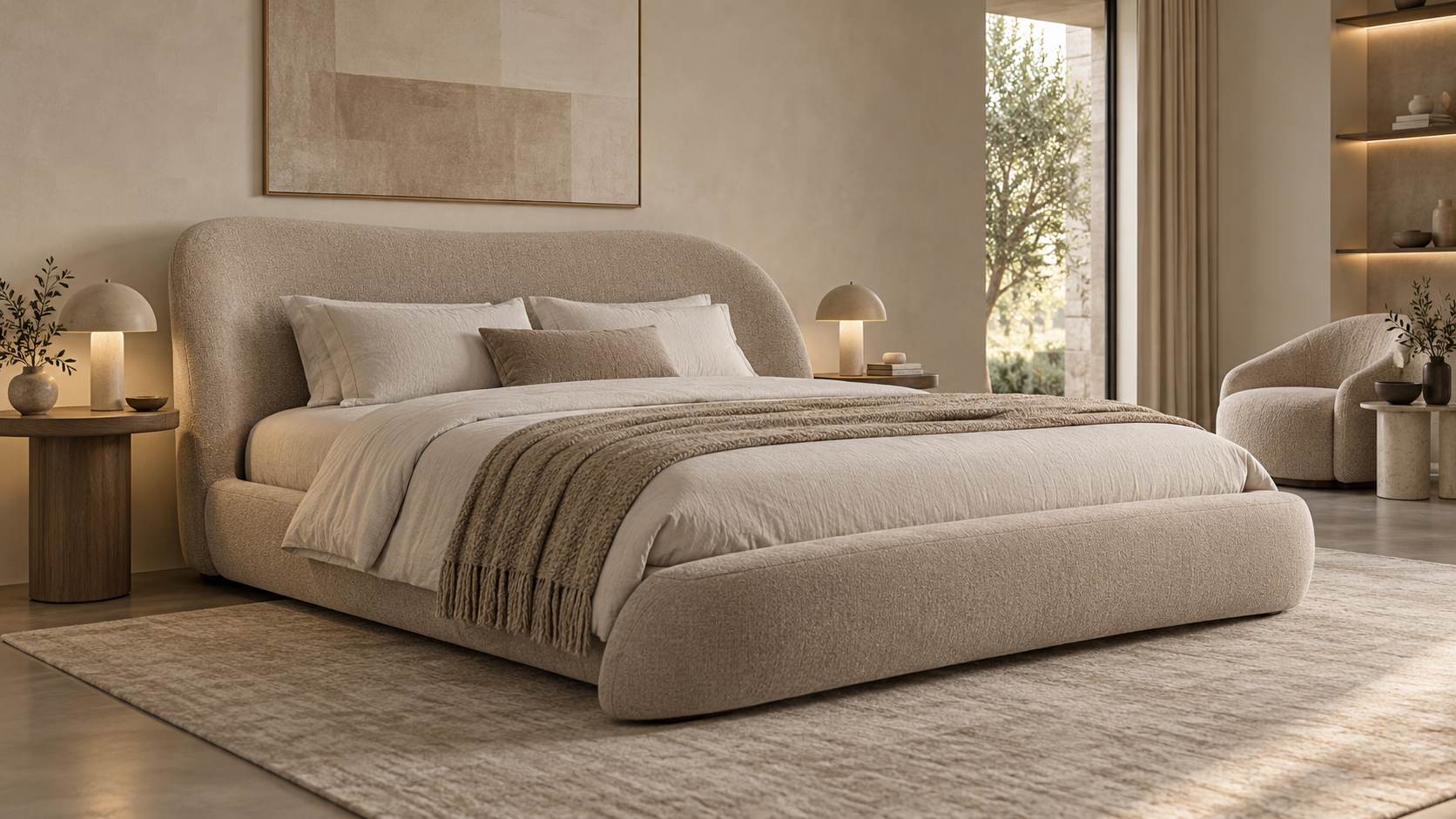
A curved upholstered bed softens the straight lines that dominate many bedrooms. The rounded outline can give a collection a more relaxed character, while the padded surface adds texture behind the mattress. For distributors and collection planners, the question is not simply whether the shape is on trend; it is how the silhouette supports a coherent range and fits the rooms customers actually furnish.
Curves attract attention, so they work best when the rest of the assortment gives them space. Pair a sculptural bed with quieter bedside pieces, simple lighting, and a fabric palette that lets the outline read clearly. If every item in the room has a strong contour, the bed loses its role as the focal point.
Where a curved profile earns its place
- Collections positioned around softer, contemporary interiors
- Feature bedrooms where the bed is intended to anchor the composition
- Showrooms that need a distinct silhouette beside conventional frames
These are merchandising applications, not guarantees of demand. Regional taste, room size, and the collection’s price position should guide the final assortment decision.
Silhouette and Footprint must be Judged Together
The visual curve does not tell buyers how much floor or wall space a bed needs. A rounded headboard may extend wider than the mattress, while a curved edge near the foot can change the frame outline. Always compare the full external dimensions with the mattress size and the bedside furniture planned for the room.
SCIHOME’s EB0253 upholstered bed is described with a curved edge and listed at 2,290 × 2,200 × 1,090 mm. That is a specific model reference, not a standard for curved beds as a category. Use the product drawing to confirm which measurement represents length, width, and height, and whether the listed size includes every upholstered projection.
Build a Range Around One Expressive Piece
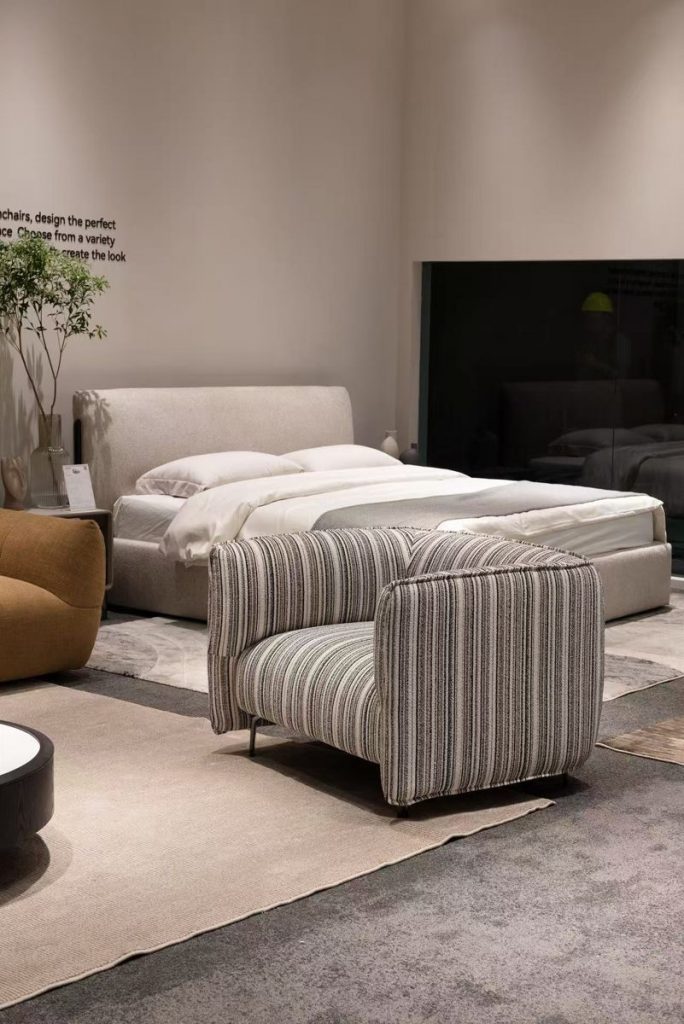
A collection feels intentional when a feature bed connects to the other items through material, proportion, or a shared design cue. A contemporary bedroom furniture range can use one signature silhouette with quieter companion pieces. The comparison below can help category teams decide how much emphasis the curved model should receive.
| Range role | Curved bed treatment | Collection planning check |
| Signature item | Distinctive rounded headboard or softened frame edge | Can it be photographed and displayed as the collection focal point? |
| Core bedroom option | Moderate curve with versatile fabric and color | Does it coordinate with existing bedside tables and textiles? |
| Complementary variation | Subtle radius or softened corners | Does it add choice without duplicating another silhouette? |
The table frames an assortment decision, not a rule about which curve sells best. Review the model next to actual companion furniture and check the range for useful visual contrast.
Fabric, Seam Placement, and Finish Shape the Result
Curved upholstery makes fabric direction and seam placement especially visible. A tight curve can pull attention toward wrinkles, joins, or changes in texture, so buyers should inspect a full-size sample or finished piece where possible. Confirm how the chosen textile behaves across the main panel and around the rounded edge.
Color also affects how much the curve stands out. A close match between fabric and wall can make the profile feel quieter; a stronger contrast can make the bed a focal object. Neither approach is inherently better, but the decision should be tested against the intended collection photography and room palette.
Questions for a design review
- Is the curved detail visible from the room entrance and key viewing angle?
- Do seams follow the intended contour without interrupting it?
- Can the bed coordinate with the collection’s storage and bedside pieces?
- Are cleaning and upholstery-care instructions available for the selected material?
A short review using swatches, room elevations, and product drawings is more reliable than approving a curve from a small catalog image.
Use the Shape to Strengthen Collection Identity
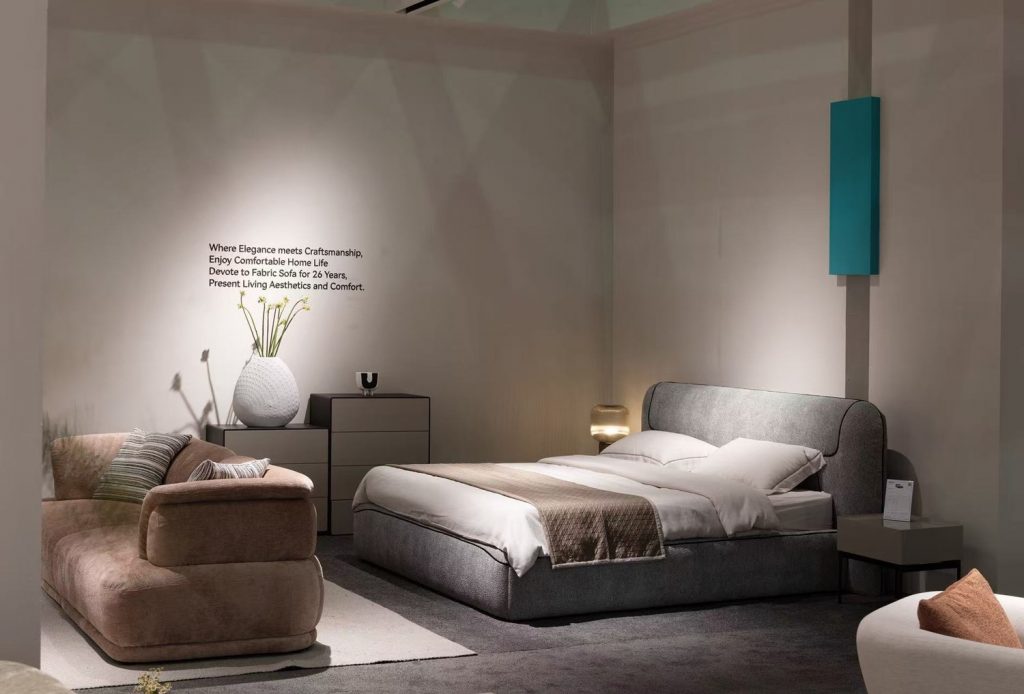
A curved bed should be selected because it contributes a clear design role, not because rounded furniture is widely discussed. Collection planners can define that role as softness, a signature profile, or a contemporary alternative, then test it against the assortment’s existing shapes and colors.
When developing curved models in house, manufacturing capacity should also be considered.
At SCIHOME, the documented bed range includes the curved EB0253 alongside other upholstered-bed designs. Our design and engineering team counts over 100 specialists, generating more than 50 new drawings monthly and over 250 new products per year. Those figures can support a discussion about range development, but individual design feasibility, materials, and final dimensions must be confirmed for the chosen model. SCIHOME’s modern upholstered furniture designs still need model-specific review.
Make the Curve Work at Collection Scale
Curved upholstered beds can add softness and a memorable silhouette to contemporary furniture collections when their footprint, fabric execution, and companion pieces are considered together. Define the bed’s role in the range, review the exact model drawing, and test fabric and seam details at useful scale. Buyers can compare SCIHOME’s curved upholstered bed styles with their current bedroom assortment before making a range decision.
SCIHOME can help you assess suitable curved profiles, upholstery options ,dimensions, and collection roles for your target market. Send your design concept, mattress sizes, and project requirements to the SCIHOME team to discuss a coordinated upholstered-bed solution for your next collection.
FAQ
Do curved beds need more room than straight beds?
They may have a different external footprint, but the answer depends on the design. Compare the complete product dimensions with the mattress and room plan, including any wider headboard or projecting frame edges.
Are curved beds a good fit for contemporary collections?
They can suit collections built around softer lines or a distinctive feature piece. Fit still depends on customer preferences, room sizes, price positioning, and how the profile works with the rest of the range.
What should buyers inspect in a curved fabric headboard?
Review fabric tension, seam placement, texture consistency, care instructions, and the finished contour. A full-size sample or finished item offers a clearer assessment than a small image alone.