Deep-seat fabric sofas can give a product line a relaxed and generous character, but their value depends on more than showroom comfort. Seat depth affects the sofa’s footprint, sitting posture, room planning, product positioning, and suitability for different distribution and project channels.
For furniture planners, hospitality procurement teams, distributors, and project furniture specifiers, the important question is where deep seating belongs in the product line and how its dimensions can remain consistent from sample approval through production. At SCIHOME, we treat seat depth as part of the complete product brief rather than an isolated comfort feature.
Seat Depth is a Product Planning Variable
Overall sofa depth describes the complete front-to-back footprint. Usable seat depth describes the sitting space from the front edge of the seat to the back support. Effective seat depth considers the space remaining after the back cushions are placed in their intended position.
These measurements serve different planning purposes:
- Overall depth shows how much floor space the sofa occupies.
- Usable seat depth indicates the available sitting area.
- Effective seat depth reflects the configuration that will be displayed and sold.
- Seat height, cushion thickness, and back angle influence perceived seating comfort.
A sofa may have a large overall depth but a moderate usable seat because of thick back cushions. Another model may appear compact externally while providing a more relaxed sitting position. Furniture planners should therefore request each measurement separately instead of using total depth as a substitute for seating information.
Assign Clear Roles to Different Seat Depths
A strong fabric sofa product line does not need one seat depth for every model. Different room types, distribution channels, and project requirements call for different proportions. A range can include compact, standard, and deep seating while maintaining a consistent visual direction.
| Seat-depth position | Suitable applications | Role in the product range |
| Compact seating | Smaller apartments, guest rooms, narrow living areas | Extends the range into space-conscious layouts |
| Standard seating | General residential projects and mixed-use apartments | Provides broad application across different markets |
| Deep seating | Large living rooms, hotel lounges, media areas | Delivers a relaxed, generously proportioned seating experience |
The exact dimensions should be confirmed for each model because frame construction, cushion thickness, seat height, and back angle affect the result. The important decision is to define the role of each depth before approving individual products.
A deep-seat sofa can serve as a feature model, while standard-depth seating carries the main volume of the assortment. Compact designs can support smaller floor plans and projects with tighter circulation. This structure gives distributors and product planners more flexibility than developing a line in which every sofa occupies the same amount of space.
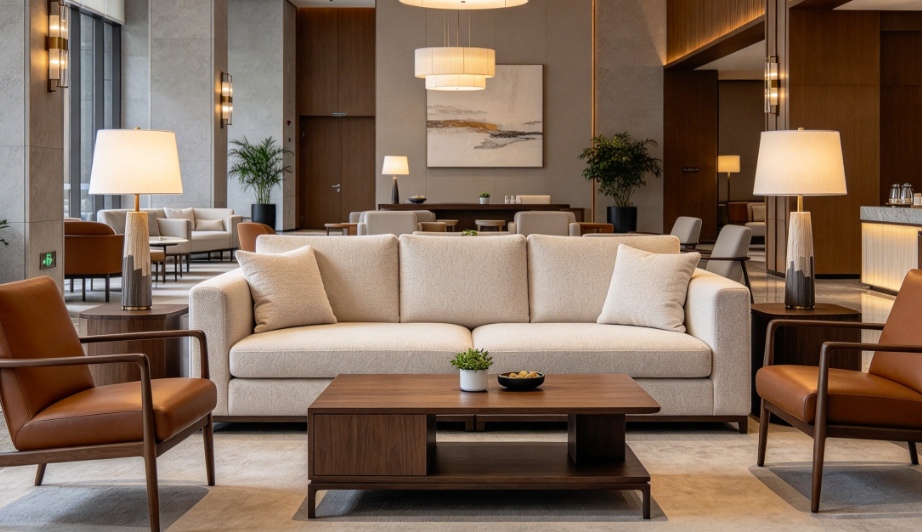
Plan Dimensions for Distribution and Project Environments
Seat depth should be reviewed against the rooms where a sofa will be displayed, sold, or installed. A dimension that works in a large open-plan home may create problems in a compact apartment, hotel room, or showroom with fixed circulation routes.
The planning review should consider:
- Typical room sizes in the target market
- Apartment layouts and furniture clearances
- Local preferences for upright or relaxed seating
- Metric or imperial specification requirements
- Door, elevator, corridor, and stair access
- The position of coffee tables and companion seating
- Walking routes and service space
For apartment-focused product lines, a deep sofa may need to be balanced with a shorter length, narrower arms, or a more compact companion chair. In larger residential developments, the same depth may work well when sufficient clearance is available around the seating group.
For distributors, seat depth also affects assortment breadth. A range that includes only deep sofas may be difficult to place in smaller homes, while a line built only around compact proportions may lack a relaxed option for larger living areas. A structured mix allows the same product direction to serve different room categories without losing consistency.
Match Seat Depth to Hospitality and Residential Projects
Hotel seating often needs to communicate comfort while supporting frequent movement around the furniture. A deep sofa may work well in a private lounge zone, but it can be less suitable beside a busy reception route.
Hospitality procurement teams should review the sofa with surrounding tables, chairs, lighting, and access paths. The complete footprint matters as much as the usable seat. A design that looks generous in isolation may make a waiting area feel crowded when several units are arranged together.
Serviced apartments and residential developments require a different balance. A single room may need to support living, dining, storage, and working functions. Standard or moderately deep seating can provide comfort while preserving space for other uses.
In a model room or showroom, a deep sofa can act as a focal product, but its relationship with the rest of the display should be checked. The sofa’s depth affects the distance to the coffee table, the apparent size of the room, and the visibility of surrounding furniture.
Coordinate Different Depths Across One Product Line
Different seat depths should still read as part of the same design direction. Consistent leg treatment, arm proportions, stitching, fabric selections, and cushion detailing can connect models with different dimensions.
Companion pieces also require review. A deep sofa may need a wider coffee table or a different table-to-seat relationship. A compact sofa may work better with smaller occasional tables and lighter accent chairs. The product line should therefore be planned as a complete room solution rather than as unrelated individual products.
At SCIHOME, we review seat depth together with product proportion, room application, cushion configuration, and companion furniture. This helps determine whether a design is suited to a compact living range, a broad residential assortment, or a project-oriented lounge setting.
Hold the Approved Dimensions Through Production
Seat depth can change when the cushion filling, back position, frame, or upholstery construction changes. The approved sample should therefore represent the exact configuration intended for production.
The approval record should identify:
- Overall width, depth, and height
- Usable and effective seat depth
- Seat height
- Back cushion thickness and position
- Seat cushion construction and firmness
- Back angle and seat slope
- Upholstery type and fabric direction
- Permitted measurement tolerances
After approval, the same information should appear in the working drawing and production specification. The first production unit can then be checked against the approved sample before the full run proceeds.
At SCIHOME, this information can be used to connect product development, sample review, and production checks. If the finished seat feels deeper or shallower than the approved version, the cause may be a cushion change, altered back position, or different upholstery tension. Measuring the frame, cushions, and finished upholstery separately makes the source of the variation easier to identify.
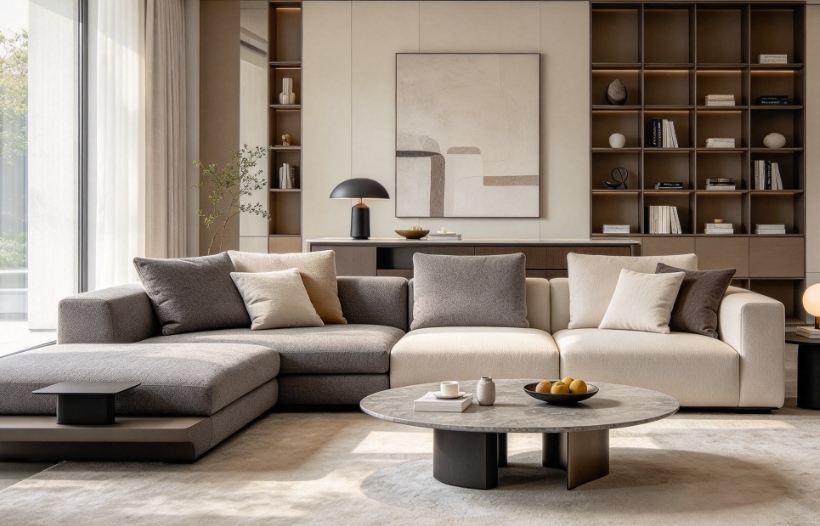
Record Seat Depth in Technical Approval Documents
A seat-depth value should always include a measurement method. Without that information, different suppliers, factories, and internal teams may record different results for the same model.
A practical specification sheet can include:
| Specification field | Purpose |
| Overall depth | Confirms the complete room footprint |
| Usable seat depth | Defines the sitting surface with the agreed cushion setup |
| Effective seat depth | Shows the space available in the selling configuration |
| Seat height | Supports posture and table-height review |
| Back cushion position | Explains how the depth was measured |
| Measurement tolerance | Defines acceptable production variation |
| Sample reference | Connects the drawing to the approved physical model |
| Application note | Identifies the intended room or project setting |
For project approvals, these details can be shown beside the product image, dimensioned drawing, and layout reference. This gives furniture planners and project teams a consistent basis for comparing models and approving a complete seating group.
Plan Seat Depth as Part of the Product Line
Deep-seat fabric sofas can strengthen a product line when their proportions match the target market and room application. Furniture planners, distributors, hospitality procurement teams, and project furniture specifiers should compare overall depth, usable seat depth, seat height, cushion configuration, and circulation requirements together.
A balanced assortment may include compact, standard, and deep seating positions. Once a model is approved, the same measurement method should remain attached to the drawing, sample, and production checks.
If you are planning a fabric sofa project, share the target room types, required dimensions, and preferred seat-depth structure with SCIHOME. Our team can review the seating plan against your project layouts and approval requirements. Explore the SCIHOME fabric sofa range or contact SCIHOME.
FAQ
How should seat depth be described in a product catalog?
The catalog should show overall depth and usable seat depth as separate values. It should also state whether the measurement was taken with the back cushions in place and identify the intended seating configuration.
Can one project use sofas with different seat depths?
Yes. Different zones may require different proportions. A lounge area may accommodate deeper seating, while a passage-facing area or compact room may require a shallower model. The dimensions should be coordinated with the layout and the visual direction of the project.
Does the same seat-depth standard work in every export market?
Not always. Room sizes, furniture layouts, local seating preferences, and measurement systems can vary between markets. A core product line can remain consistent, but the most suitable seat-depth mix may need to be reviewed for each market or project category.